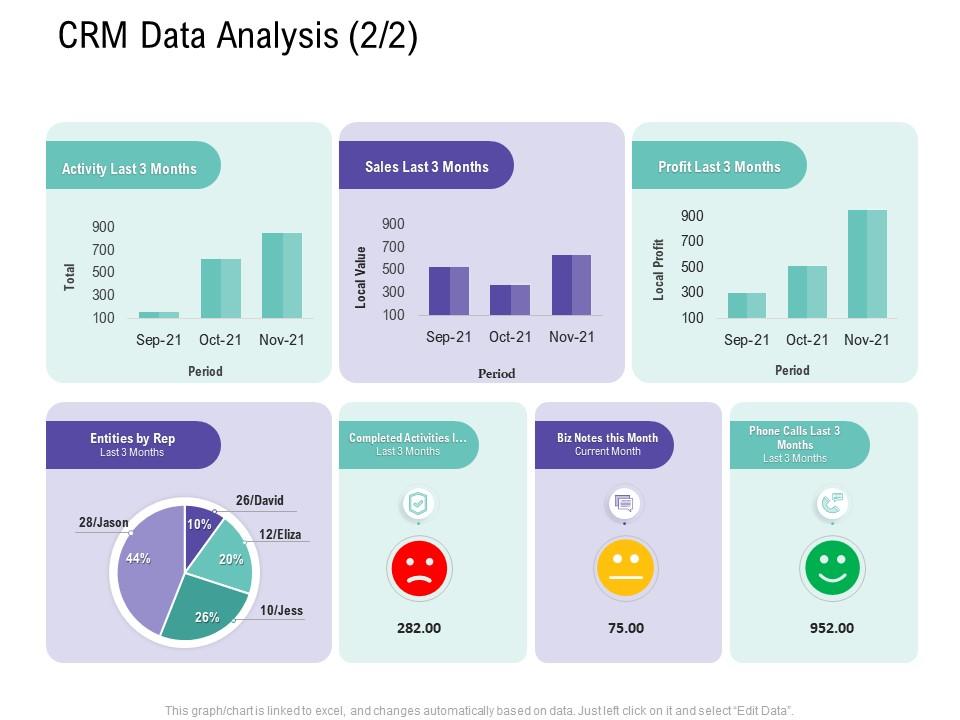
In the modern boardroom, data is no longer a supporting act—it is the headline. Executive stakeholders and board members expect more than gut feelings or assumptions. They demand clarity, strategy, and quantifiable results. Customer Relationship Management (CRM) data provides a treasure trove of insights that, when used effectively, can transform your board presentations from vague summaries into strategic powerhouses.
In this article, we’ll explore how to use CRM data in board presentations to inform decisions, showcase progress, and align leadership on revenue growth, customer engagement, and business direction.
Why CRM Data Belongs in the Boardroom
CRM platforms capture every interaction your company has with leads, customers, and prospects. From sales pipelines to customer satisfaction scores, CRM data offers:
- Accurate, real-time metrics
- Customer-centric insights
- Clear visualizations of business health
- Predictive analytics for future planning
Using CRM data in board presentations demonstrates a data-driven culture and gives leadership teams the intelligence they need to act with confidence.
Key CRM Metrics to Include in Board Presentations
1. Sales Performance Metrics
These are the lifeblood of any board-level discussion:
- Total Revenue and Revenue Growth
- Sales Pipeline Value by Stage
- Win/Loss Rates
- Average Deal Size
- Sales Cycle Length
Presenting these metrics from your CRM shows how your sales team is tracking against targets and reveals pipeline efficiency and bottlenecks.
2. Customer Acquisition Metrics
Demonstrate the effectiveness of your go-to-market strategies:
- Number of New Leads Generated
- Lead-to-Customer Conversion Rates
- Cost per Acquisition (CPA)
- Marketing Source Attribution
Boards want to understand whether the company is attracting the right customers, at the right cost, through the right channels.
3. Customer Retention and Engagement Metrics
Customer lifetime value is often more important than one-time acquisition:
- Churn Rate
- Customer Retention Rate
- Net Promoter Score (NPS)
- Customer Satisfaction (CSAT)
- Upsell/Cross-sell Metrics
These figures provide insight into the health of your customer base, support quality, and long-term revenue potential.
4. Forecasting and Projections
CRM systems can forecast revenue based on historical trends and current pipeline status. Use CRM forecasting data to:
- Project next quarter’s revenue
- Identify potential shortfalls early
- Set realistic growth expectations
- Justify budget or headcount adjustments
Forecasting shows you’re thinking ahead, not just reporting on the past.
How to Present CRM Data Effectively to the Board
1. Use Dashboards and Visuals
Don’t drown your board in raw data. Instead, use:
- Pie charts for deal source breakdowns
- Funnel visuals for sales pipelines
- Line graphs for revenue trends
- Heatmaps for regional performance
- Leaderboards for top-performing reps
Most CRMs like Salesforce, HubSpot, or Zoho allow you to export dashboards or embed live reports. Visual data tells a story faster and more clearly than tables of numbers.
2. Tell a Narrative, Not Just Numbers
Tie your CRM data to business outcomes. For example:
“This quarter, our lead-to-customer conversion rate increased by 18%, largely driven by the automation campaign we launched via our CRM’s email integration. This directly contributed to our $450K pipeline growth.”
This kind of narrative shows causality and strategy, not just activity.
3. Segment Your Data for Strategic Insights
Rather than looking at company-wide metrics only, segment your CRM data to reveal deeper trends:
- By region
- By product or service
- By customer size or industry
- By marketing channel
- By sales rep or team
Segmented data shows where growth is coming from—and where there are opportunities for optimization.
4. Focus on Strategic KPIs
Not all data is board-level data. Focus on KPIs that align with company goals, such as:
- Customer Lifetime Value (CLTV)
- Customer Acquisition Cost (CAC)
- Monthly Recurring Revenue (MRR)
- ARR (Annual Recurring Revenue)
- Sales Efficiency Ratio (Revenue/Expenses)
These metrics connect CRM insights to financial performance and strategic objectives.
Best Practices for Using CRM Data in Board Presentations
Keep It High-Level and Impactful
Board members want the big picture. Highlight trends, patterns, and changes—avoid granular day-to-day details unless requested.
Benchmark Against Targets and Previous Periods
Always compare CRM data to:
- Historical performance
- Forecasted goals
- Industry benchmarks
This adds context and gives stakeholders a frame of reference for evaluating success.
Highlight Wins and Address Risks
Use CRM data to celebrate progress but also to flag concerns early. For example:
“Our pipeline is 22% lighter than last quarter—if this trend continues, Q4 revenue may fall short by $500K unless we accelerate top-of-funnel lead generation.”
This builds credibility and trust.
Automate Your Reporting
CRMs can generate recurring reports, dashboards, and data exports. Use automation to:
- Prepare monthly or quarterly updates in advance
- Pull live data for real-time presentations
- Eliminate manual errors and inconsistencies
This ensures your reports are always current and accurate.
Tools That Enhance CRM Data Presentation
Pair your CRM with business intelligence tools to supercharge your board reports:
- Tableau or Power BI – Advanced data visualization from CRM exports
- Google Data Studio – Free dashboards with CRM connectors
- CRM-native tools – HubSpot, Salesforce, Zoho, and others offer real-time dashboards
These platforms help convert raw CRM data into boardroom-ready visuals that are easy to interpret and act on.
Real-World Example: Presenting CRM Data to the Board
Let’s say you’re presenting to the board of a SaaS company.
You include the following CRM-derived visuals:
- A funnel chart showing a 30% increase in qualified leads
- A revenue graph with a 12% month-over-month growth trend
- A pie chart showing 65% of sales now come from inbound marketing
- A heatmap revealing lower conversion in the APAC region
- A dashboard comparing current pipeline vs. quarterly goal
You then tell the board:
“Thanks to automated lead nurturing via our CRM, inbound conversions rose by 20%, directly fueling our growth. However, APAC underperformance needs targeted attention next quarter.”
This is exactly the kind of strategic, data-backed insight that earns board confidence and drives action.
Conclusion
Using CRM data in board presentations allows you to speak the language of strategy, metrics, and measurable outcomes. When you present real-time, actionable insights backed by CRM data, you empower your board to make smarter decisions—and you position yourself as a forward-thinking, results-driven leader.