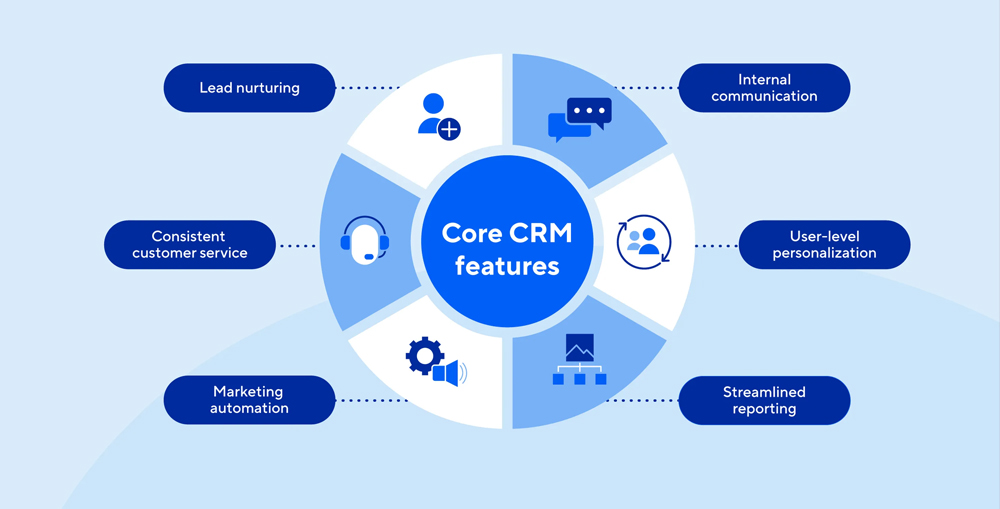
Customer feedback is a cornerstone of business growth. It reveals what your customers think, how they feel, and where your product or service can improve. However, manually gathering and analyzing feedback can be time-consuming and inconsistent. That’s where Customer Relationship Management (CRM) systems come into play. By automating customer feedback, CRM tools enable businesses to capture insights at scale, act on them in real time, and continuously enhance the customer experience.
In this article, we’ll explore how CRM can automate customer feedback, why it matters, the tools involved, and how it contributes to long-term business success.
Why Automating Customer Feedback Matters
Customer feedback is only valuable when it’s consistent, timely, and actionable. Manual methods—like email surveys or phone follow-ups—can result in missed opportunities, delayed responses, and scattered data.
CRM automation solves this problem by:
- Collecting feedback consistently at key touchpoints
- Sending surveys automatically after interactions or transactions
- Analyzing responses quickly through built-in analytics
- Triggering workflows based on customer sentiment
This level of automation ensures that no customer voice is lost and that every insight can contribute to product innovation, service improvement, and higher satisfaction.
Key Ways CRM Automates Customer Feedback
1. Automated Survey Distribution
One of the most powerful CRM automation features is the ability to send surveys based on customer actions. You can trigger feedback requests after:
- Purchase completion
- Customer service interactions
- Subscription renewals or cancellations
- Product trials or demos
- Website visits or downloads
For example, a CRM like Salesforce, HubSpot, or Zoho can be configured to automatically email a satisfaction survey after a ticket is closed or a product is delivered.
This ensures feedback is collected in the moment, when the experience is fresh in the customer’s mind.
2. Centralized Feedback Collection
CRM systems integrate with feedback tools like:
- Google Forms
- Typeform
- SurveyMonkey
- NPS (Net Promoter Score) tools
- CSAT (Customer Satisfaction Score) platforms
Responses from these sources can be pulled directly into the customer’s CRM record. This centralized approach allows teams to see the entire customer journey alongside their feedback, helping sales, support, and marketing teams respond more effectively.
3. Real-Time Sentiment Analysis
Modern CRM platforms use AI-powered tools to analyze customer feedback automatically. These tools can:
- Detect sentiment (positive, neutral, or negative)
- Highlight key issues and trends
- Prioritize urgent responses
- Identify recurring complaints
With real-time alerts, managers can act on negative feedback immediately—before it escalates—turning dissatisfied customers into loyal advocates.
4. Feedback-Driven Workflows
CRMs can automatically trigger workflows based on feedback results. For instance:
- If a customer rates a service poorly, a ticket is automatically created and escalated.
- If a customer gives a perfect score, a follow-up email offers a referral reward.
- If a product feature is consistently criticized, the data is shared with product development.
These automated responses ensure feedback doesn’t just sit in a database—it drives meaningful action.
5. Integration with Customer Journeys
Customer feedback isn’t a one-time event. It’s part of a broader lifecycle. CRM systems allow businesses to insert feedback opportunities across the entire customer journey, including:
- Onboarding: New user experience surveys
- Mid-journey: Product usage or feature feedback
- Renewal or exit: Churn prevention or exit interviews
Automating these checkpoints helps create a continuous loop of feedback, reinforcing the relationship and showing customers that their opinions are valued.
Benefits of Automating Customer Feedback with CRM
1. Higher Response Rates
Automated, well-timed surveys generate better participation than ad-hoc requests. Customers are more likely to respond when feedback requests feel relevant and easy.
2. Faster Time to Resolution
CRM-triggered alerts and workflows ensure that negative feedback is addressed quickly, improving customer satisfaction and reducing churn.
3. Data-Driven Decision Making
Collected feedback, tied to CRM data, gives managers a full view of customer needs, allowing for smarter business decisions and product improvements.
4. Improved Personalization
CRM systems can track individual feedback history, enabling tailored follow-ups, loyalty rewards, or customized outreach.
5. Stronger Customer Relationships
Automated feedback shows that your company listens and cares—building trust, credibility, and long-term loyalty.
Best Practices for Automating Feedback with CRM
- Keep Surveys Short and Simple: Long surveys reduce completion rates. Stick to key questions that yield actionable data.
- Time It Right: Trigger feedback at logical points in the customer journey (e.g., post-interaction, post-purchase).
- Personalize Messaging: Use the CRM to personalize feedback requests with names, purchase history, or specific services used.
- Close the Loop: Always follow up—thank customers for their feedback and let them know how their input is being used.
- Monitor Metrics: Track NPS, CSAT, CES (Customer Effort Score), and open rates to refine your feedback strategy.
Popular CRM Tools for Feedback Automation
Some of the best CRM platforms for automating customer feedback include:
- HubSpot: Offers built-in survey tools with workflows for NPS and CSAT tracking
- Salesforce: Integrates with Feedback Management and Einstein AI for sentiment analysis
- Zoho CRM: Provides survey triggers and form builders with data routing options
- Freshsales: Includes feedback automation post-interaction via Freshdesk integration
- Pipedrive + Survicate: Combine CRM with survey data for deep behavioral insights
These platforms allow businesses of all sizes to build feedback engines that run automatically, gather real insights, and respond intelligently.
Future of Feedback Automation with CRM
The future of CRM and feedback automation lies in:
- Conversational Feedback via Chatbots
- Voice-of-the-Customer (VoC) AI Engines
- Predictive Analytics on Customer Sentiment
- Integration of Social Listening into CRM Profiles
As these technologies evolve, companies will be able to anticipate customer needs before they arise, driving deeper satisfaction and competitive advantage.
Conclusion
Customer feedback is no longer a “nice-to-have”—it’s a strategic necessity. Automating feedback through CRM transforms how businesses collect, analyze, and act on insights. From better response rates to faster issue resolution and stronger relationships, the impact is clear.